In modular projects, typical conditions are the backbone of efficiency. Repetition enables streamlined fabrication, predictable workflows, and faster production cycles. However, for every advantage gained through standardization, non-typical modules introduce a proportional increase in coordination complexity. These units, often unique in geometry, function, or systems, require a level of upfront design alignment that far exceeds what would normally be addressed on site in a conventional project.
Why Coordination Must Happen Earlier
In traditional construction, many coordination issues can be resolved directly in the field. A routing conflict or a shaft adjustment can often be handled with relative ease during installation. But in modular construction, prefabrication shifts the problem-solving timeline forward. What could be resolved in hours on site becomes a critical design task that must be finalized before materials are procured and assemblies begin. Once a module enters production, the flexibility to modify becomes limited and costly.
The Nature of Non-Typical Spaces
Non-typical areas are where complexity becomes most visible. Back-of-house zones, technical rooms, and unique common spaces such as laundry rooms, specialty kitchens, amenity area rarely follow a repeating layout. They often contain dense, non-standard MEP systems that must fit precisely within structural and architectural constraints.
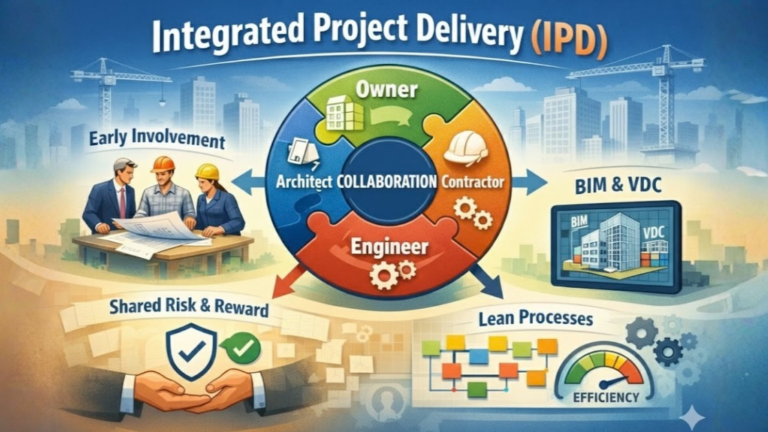
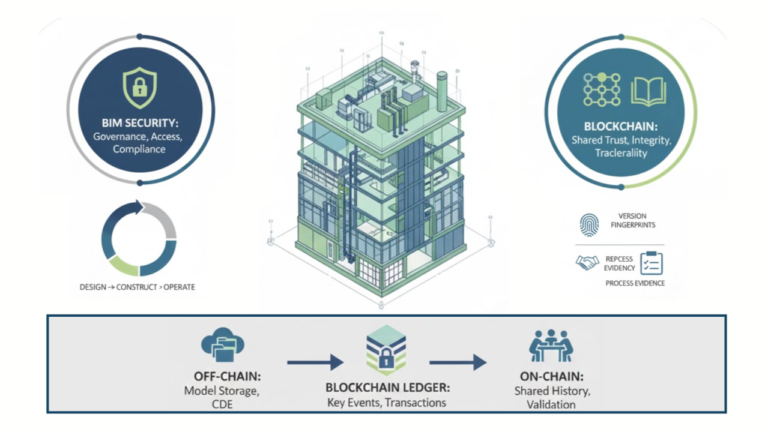
Because of this, every discipline, structure, mechanical, electrical, plumbing, fire protection, must complete detailed and early coordination to ensure a clash-free, fully integrated model before fabrication begins.

Hybrid and Partial-Build Strategies
Given these challenges, many modular projects adopt hybrid construction methods, where non-typical areas are built conventionally on site. This reduces risk when variability is too high or coordination becomes overly complex.
When full off-site construction is preferred, manufacturers may propose a partial-build approach, leaving certain systems for on-site completion. Even in these scenarios, pathways, penetrations, and allocation zones must be fully coordinated in advance to avoid field conflicts.
Based on our experience, pursuing non-typical conditions as on-site construction can often be a faster and more practical solution. This is largely because design development and multi-disciplinary coordination for these spaces are not always fully resolved by the time fabrication is scheduled to begin. In many projects, non-typical areas are concentrated on the ground floor—often defined as individual rooms rather than stacked modules—which makes conventional on-site construction more accessible and flexible compared to off-site production.
Key Decision Factors
Determining what to build off-site versus on-site depends on several project-specific factors:
- Complexity of program and geometry
- Unique system requirements
- Project schedule and critical path
- Budget constraints
- Manufacturing capabilities and tolerances
Each project demands its own strategy, rather than relying on a universal modular formula.
Practical Insights From the Field
From our experience, success in handling non-typical modules depends on one core principle: resolve complexity before fabrication begins.
Clear system routes, early clash detection, and design development aligned with manufacturer capabilities ensure that modules transition smoothly from factory to site. Even when some work is intentionally left for the field, a well-coordinated framework minimizes on-site labor and prevents unexpected issues.
As modular construction matures, the balance between typical and non-typical modules will become increasingly important. By sharing these insights from our project experience, we aim to contribute to a more practical, experience-based understanding of modular delivery—beyond the simplified promise of standardization alone.
Interested in our practice? Let’s connect and discuss your project!
Contact us: genx@genxdt.com; 1(201)-500-7534