Beyond Lines on a Screen: What 5D Really Means
What if a single design change could instantly reveal its impact on schedule and cost?
For decades, 2D CAD has been the standard for documenting designs. It is precise and familiar, yet in today’s complex projects it often leaves critical gaps. Drawings show geometry but not how decisions affect time, budget, or coordination. 5D Building Information Modeling (BIM) fills this gap by adding two essential dimensions, time and cost, turning static drawings into a dynamic model that connects every decision to its real project impact.
Why Staying in 2D Can Cost More Than You Realize

In a 2D workflow, design files, schedules, and cost data usually live in separate systems. This separation slows decision-making and makes it harder to understand the real impact of a change until the consequences have already reached the site. By then, adjustments are more disruptive and more expensive.
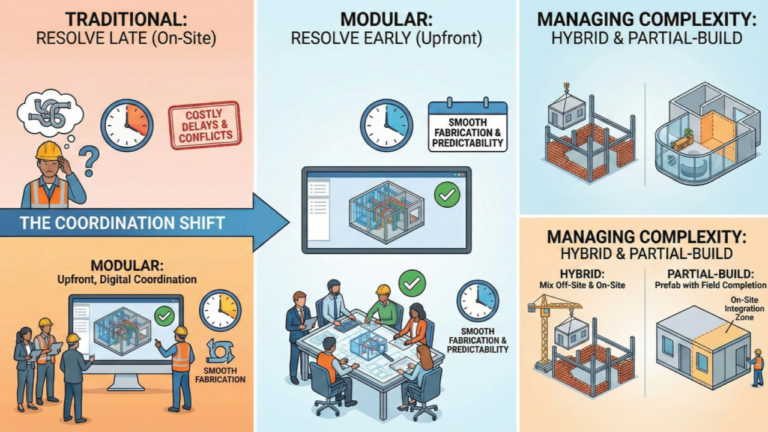
With 5D modeling, the connection between design, time, and cost is visible from the beginning. Project teams can explore “what if” scenarios, test the effects of design options on delivery timelines, and see how different material choices influence both budget and sequencing. This foresight allows adjustments to be made when they are least costly and most effective, reducing the likelihood of delays or unplanned expenses.
Turning Information into Better Decisions

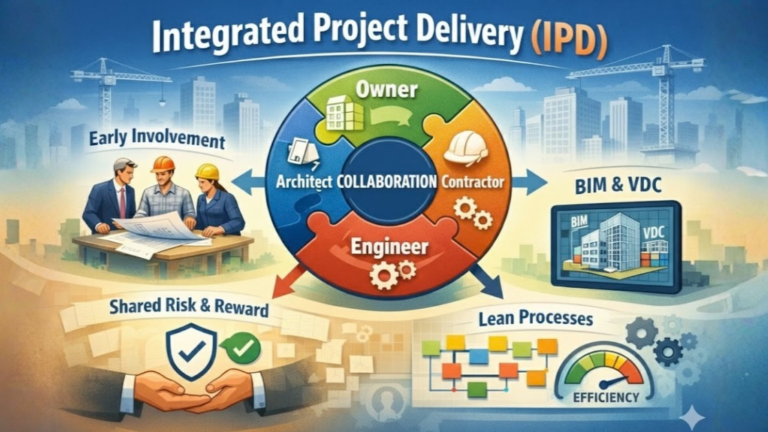
The strength of 5D modeling lies not only in the richness of the data, but in how it supports collaboration. A single integrated model provides a consistent reference point for owners, designers, and contractors, making it easier to align expectations and reduce miscommunication.
Cost and schedule impacts are no longer abstract figures in a report; they are tied directly to visible design elements in the model. When stakeholders can see the implications of a choice in both spatial and financial terms, discussions become more productive, and approvals move more quickly. This transparency helps maintain trust and keeps projects moving forward with fewer surprises.
With cost and time linked directly to design elements, teams can:
- Forecast accurately and adjust early when conditions change
- Prevent scope creep before it impacts the bottom line
- Coordinate across disciplines using a shared, up-to-date model
- Reduce approval cycles by presenting clear, data-backed scenarios
The result is not just better drawings, it’s a faster, leaner, and more predictable project.
How GenX Delivers the Value of 5D

Introducing 5D BIM to a project is not just a matter of installing new software. It requires a deliberate process to integrate geometry, time, and cost data, and to keep that integration consistent throughout the project lifecycle.
At GenX, we build this foundation from the earliest stages of design. Our approach combines:
- Structured data standards that keep cost and schedule information accurate throughout the project
- Cross-team coordination that brings owners, designers, and contractors into the same decision-making process
- Ongoing model management to ensure forecasts remain reliable as the project evolves
By uniting technical precision with disciplined coordination, we help teams move from reactive problem-solving to confident, proactive delivery.
Interested in our practice? Let’s connect and discuss your project!
Contact us: genx@genxdt.com; 1(201)-500-7534