The Hidden Complexity of Modular Fabrication
Having worked on multiple modular projects, we’ve experienced firsthand the unique challenges and opportunities that come with this approach.
In this series, we’ll walk you through each stage of the process, from early design coordination to shop drawings and on-site assembly, sharing lessons learned, practical insights, and best practices that help transform modular designs into efficient, high-quality builds.
Modular Fabrication: More Dynamic Than It Seems
Modular fabrication is often seen as a highly standardized process, but in reality, it requires one of the most dynamic coordination efforts in construction. Behind each “identical” module lies a complex sequence of trades, each with its own priorities, dependencies, and fabrication logic.
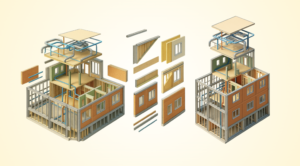
From structural steel to MEP systems to façades, every trade contributes at different stages of production. Coordinating these disciplines is not just about combining models; it’s about understanding when and how each trade should take the lead. The sequence may vary from project to project; for instance, structural elements are often coordinated first, while façade systems typically follow in later stages. Establishing and maintaining this sequence according to fabrication priorities ensures smoother assembly and minimizes rework.
Parallel Coordination and Documentation
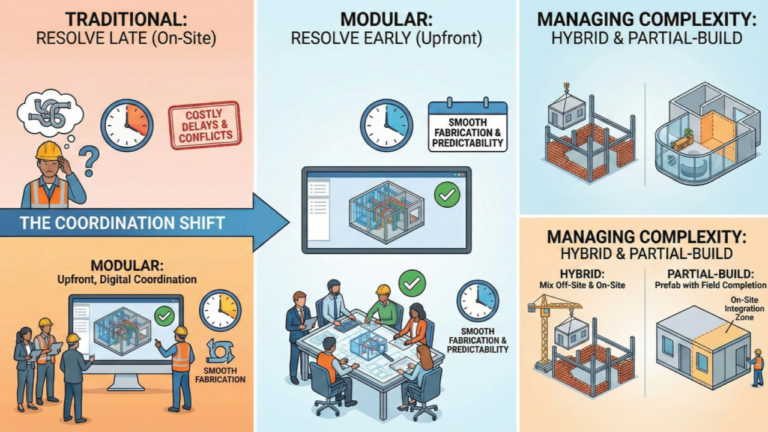
Design coordination must progress in parallel with fabrication documentation. Every revision made in the 3D coordination model should be mirrored and validated through updated, frozen shop drawing sets. Relying solely on digital models without verified documentation can lead to inconsistencies once production begins. In the end, all digital deliverables, including 3D models, trade shop drawings, and design documents, must align with what is actually being fabricated.
Ultimately, successful modular fabrication is not just about repetition. It’s about precision, timing, and coordination across trades. A well-sequenced and well-documented process allows DFMA teams to respond quickly to revisions, maintain quality, and deliver true efficiency from design to manufacturing.
Interested in our practice? Let’s connect and share us more about your project!
Contact us: genx@genxdt.com; 1(201)-500-7534